Ranking on Page One is Futile if Your Website Fails to Convert: The Real SEO Challenge
Getting your website to show up on the first page of search results is a big deal, right? It feels like the ultimate win. But what if all those clicks don't actually lead to people doing what you want them to do, like buying something or contacting you? It turns out that just being visible isn't the whole story. The real challenge in SEO is making sure that when people find you, they actually stick around and take action. Why ranking on Page One means nothing if your website doesn’t convert is the question we need to answer.
Key Takeaways
- Appearing on the first page of search results is only half the battle; the real win comes when visitors convert into customers or leads.
- A website needs more than just good search engine ranking; it must be user-friendly, engaging, and clearly guide visitors towards a desired action.
- Optimizing for user experience, including mobile responsiveness and fast loading times, is just as important as keyword strategy for keeping visitors on your site.
- Building trust through authentic content, customer reviews, and clear contact information encourages visitors to engage further and convert.
- Clear calls to action and simplified contact methods are vital for turning interested visitors into valuable leads or customers.
Understanding Why Page One Rankings Are Not Enough
So, you've put in the work. Your website is showing up on the first page of Google for your target keywords. That's great, right? Well, maybe. It's easy to get caught up in the excitement of ranking high, thinking that's the ultimate goal of search engine optimization. But honestly, if those clicks aren't turning into something more meaningful for your business, then all that effort might be a bit of a waste.
The Illusion of Search Engine Dominance
Showing up on page one feels like winning the lottery. You imagine a flood of visitors, all eager to see what you have to offer. But here's the thing: search engines are just the gatekeepers. They direct traffic, sure, but they don't guarantee that the people they send over are actually interested in what you're selling or offering. It's like having a prime spot at a busy market; people walk by, but do they stop and buy? Not necessarily. The real win isn't just getting found; it's getting found by the right people and then convincing them to take the next step. Many businesses focus so much on the ranking game that they forget the ultimate purpose: to connect with customers and achieve business goals. This focus on just ranking can lead to a lot of wasted effort if the website itself isn't set up to convert those visitors.
When Clicks Don't Lead to Conversions
Imagine this: someone searches for "best local bakery." Your site pops up at the top. They click. They land on your homepage, maybe browse a few pictures of cakes, but then they leave. No order, no inquiry, nothing. This happens more often than you'd think. A high click-through rate (CTR) is good, but it's only half the story. If visitors aren't doing what you want them to do – whether that's filling out a contact form, making a purchase, or signing up for a newsletter – then those page one rankings are just vanity metrics. It's like having a beautiful storefront that no one actually enters. We need to look beyond just the traffic numbers and examine what happens after someone arrives on the site. Are they finding what they need? Is it easy for them to take the next step? If not, those clicks are essentially going nowhere.
The True Measure of SEO Success
So, what's the real deal then? It's about turning those visitors into customers or leads. It's about achieving your business objectives. SEO success isn't just about ranking; it's about the impact those rankings have on your bottom line. This means looking at metrics that show actual engagement and conversion, not just traffic volume. Think about:
- Conversion Rate: What percentage of visitors actually complete a desired action?
- Lead Quality: Are the leads generated through search actually turning into paying customers?
- Return on Investment (ROI): Is the money and time spent on SEO actually generating more revenue than it costs?
Focusing solely on search engine rankings without considering user behavior and conversion pathways is like building a magnificent highway that leads nowhere. The true challenge lies in guiding those who arrive to their intended destination on your site, which ultimately serves your business goals.
Ultimately, the goal is to create a website that not only ranks well but also effectively communicates value and encourages action. This involves understanding user intent deeply and aligning your website's structure and content to meet those needs, turning casual browsers into loyal customers. For more on how AI is changing search and content strategy, check out this information on AI and SEO.
Optimizing Your Website for User Engagement
So, you've managed to get people to your website. Great! But what happens next? If they land on your page and immediately bounce, all that effort to rank on page one was pretty much for nothing. The real win isn't just getting clicks; it's getting those clicks to actually do something. That means making your website a place people want to hang out, explore, and ultimately, take the action you want them to.
Crafting Compelling Homepage Headlines
Your homepage headline is like the handshake you give a visitor. It needs to be firm, friendly, and clearly state who you are and what you do. Forget fancy jargon; people want to know right away if you're the solution to their problem. A good headline grabs attention and makes them think, "Okay, this might be for me." It sets the tone for everything that follows.
- Clarity over cleverness: State your main benefit upfront.
- Audience focus: Speak directly to their needs or desires.
- Conciseness: Get to the point quickly.
Ensuring Intuitive Website Navigation
Imagine walking into a store where everything is out of place and there are no signs. Frustrating, right? Your website should be the opposite. People need to find what they're looking for without a struggle. This means having a clear menu, logical categories, and internal links that guide them smoothly from one page to another. If they get lost, they'll likely leave. Making it easy for people to find information is key to keeping them on your site longer and encouraging them to explore more pages, which can really help with SEO performance.
Here’s a quick checklist for good navigation:
- Main Menu: Keep it simple with 5-7 key categories.
- Search Bar: Make it visible, especially for larger sites.
- Footer Links: Include important but less-used links like contact info and privacy policies.
- Breadcrumbs: Show users where they are on the site.
Showcasing Authentic Project Portfolios
People want to see proof. Your portfolio isn't just a gallery; it's your evidence. Instead of just listing projects, tell the story behind them. What was the problem? What was your solution? What were the results? Use real images and details that show the quality of your work. This builds trust and gives potential clients a clear picture of what you can do for them. It’s about demonstrating your capabilities in a way that feels genuine and relatable.
Showing off your past work effectively is more than just posting pictures. It's about building a narrative that connects with potential clients and proves you can solve their specific problems. Think of it as a visual resume that tells a compelling story of success.
When presenting your work, consider:
- High-quality visuals: Use clear photos or videos.
- Project descriptions: Briefly explain the challenge and your approach.
- Client results: Quantify the impact whenever possible (e.g., increased sales by X%, reduced costs by Y%).
- Client testimonials: Include quotes from happy clients related to the specific project.
The Critical Role of Content and Keywords
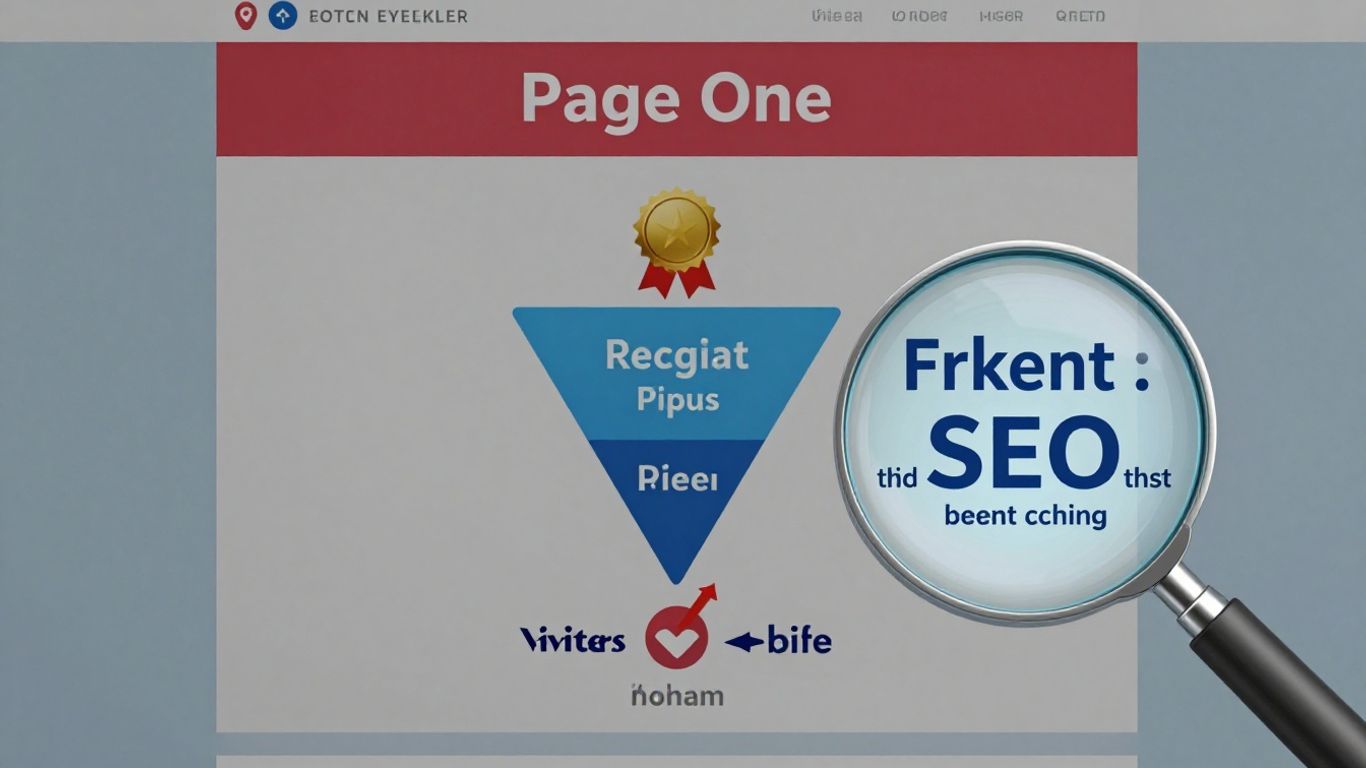
So, you've managed to get your website to the first page of Google. Great job! But here's the thing: if the words on your pages don't actually connect with people or tell them what they need to know, all that ranking effort is pretty much wasted. It's like having a beautiful storefront on a busy street but no actual products inside. People might look, but they won't buy.
Strategic Keyword Integration for Relevance
Think of keywords as the bridge between what people are searching for and what you offer. It's not just about stuffing a few popular terms into your text; it's about understanding the intent behind those searches. Are people looking for information, a specific product, or a solution to a problem? Your content needs to answer that question directly. Using tools to see what terms people actually use can help a lot. You want to place these keywords naturally, not just in headers, but also in the first few sentences where they'll be seen quickly. If your keywords don't match what your content is actually about, people will click away fast, and search engines notice that.
- Identify your audience's search terms. What phrases do they type into search engines?
- Match keywords to content intent. Does the keyword signal a need for information, a purchase, or something else?
- Integrate keywords naturally. Avoid keyword stuffing; focus on readability and user experience.
Structuring Content for Clarity and Impact
Even with the right keywords, if your content is a jumbled mess, visitors will leave. Nobody wants to read a wall of text. Breaking things up with headings, bullet points, and short paragraphs makes it easier for people to scan and find what they're looking for. This also helps search engines understand what your page is about. Think about how you read things online – you skim, right? Your content should make that skimming process productive for the reader. A well-structured page keeps people engaged longer, which is a good signal to search engines.
Good content structure isn't just about looking neat; it's about respecting your visitor's time and making information easy to digest. This directly impacts how long they stay and whether they find what they need.
Avoiding Generic Content with Authentic Imagery
In today's online world, people can spot bland, stock-photo-filled content a mile away. They want real. Using genuine photos of your projects, your team, or your products makes your website feel more human and trustworthy. It shows you're not just another faceless business. This authenticity builds a connection that generic content just can't match. When people feel a connection, they're more likely to stick around and consider what you have to say, or sell. It's about showing, not just telling, and using real visuals is a big part of that. This is especially important when building trust for your business.
Enhancing User Experience Across Devices
Prioritizing Mobile Responsiveness
Let's face it, most people are browsing on their phones these days. If your website looks wonky or is a pain to use on a small screen, they're just going to leave. And they probably won't come back. Google even found that a big chunk of users won't return to a mobile site they had trouble with. So, making sure your site works well on phones and tablets isn't just a nice-to-have; it's pretty much a requirement. You want folks to have a good time no matter what device they're using.
Here’s a quick checklist to see if you're on the right track:
- Font Size: Can people actually read the text without squinting?
- Button Size: Are the buttons big enough to tap easily with a thumb?
- Navigation: Is it simple to get around, or are menus hidden in weird places?
- Layout: Does everything stack up nicely, or does it look like a jumbled mess?
Take a few minutes to actually look at your site on different phones and tablets. You might be surprised what you find.
Optimizing Site Speed for Visitor Retention
Nobody likes waiting around for a webpage to load. If your site is slow, people will click away. It’s that simple. Think about it: when you’re looking for something online, do you wait patiently for a sluggish page, or do you hit the back button and try another site? Most of us do the latter.
Google pays attention to this too. They have these things called Core Web Vitals that basically measure how good the experience is for visitors. Three big ones are:
- Largest Contentful Paint (LCP): How fast does the main stuff on the page show up? Aim for under 2.5 seconds.
- First Input Delay (FID): How quickly does the page respond when someone clicks something? Keep it under 100 milliseconds.
- Cumulative Layout Shift (CLS): Does the page jump around while it's loading? Try to keep this score below 0.1.
Improving these can make a big difference. Things like using good hosting, making images smaller, and cleaning up your code can speed things up a lot.
Slow websites don't just annoy visitors; they actively push them towards your competitors. Every second a page takes to load is a potential customer lost. Speed isn't just a technical detail; it's a direct factor in whether someone stays or goes.
Creating Accessible and User-Friendly Interfaces
Making your website easy for everyone to use is super important. This means not just people with perfect vision and steady hands, but also those with disabilities. Accessibility isn't just about being nice; it's about making sure everyone can actually use your site and get the information they need.
Think about these points:
- Clear Navigation: People should be able to find what they're looking for without a struggle.
- Readable Text: Use clear fonts and good contrast between text and background.
- Keyboard Navigation: Can someone use your site using only a keyboard?
- Alt Text for Images: Describe images for screen readers.
When your site is easy to use for everyone, it generally leads to a better experience for all visitors, which can help with those all-important conversions.
Building Trust and Authority Through Reputation
Getting people to click on your site is only half the battle, right? The real win is getting them to stick around and believe what you're saying. That's where building trust and showing you're a reputable source comes in. It's not just about having a slick website; it's about proving you're the real deal.
Leveraging Customer Reviews and Testimonials
Think about it: when you're looking for a new restaurant or a service, what do you check first? Probably what other people are saying. The same applies online. Positive reviews and testimonials act like word-of-mouth recommendations, but on a much bigger scale. They show potential clients that others have had good experiences with you. Don't just shove them all onto one 'Testimonials' page, though. Sprinkle short, impactful quotes throughout your homepage, service pages, and even project showcases. It makes your claims feel more genuine when a happy client's words pop up right where someone is considering your services. Gathering these can be as simple as asking clients for feedback after a project wraps up; their honest thoughts can be marketing gold.
Showcasing Expertise with Case Studies and Portfolios
Your portfolio is your visual resume, and case studies are the detailed stories behind your successes. Instead of just listing services, show them in action. A well-put-together portfolio demonstrates your past work and the quality you deliver. But case studies? They go deeper. They explain the problem a client had, how you tackled it, and the results you achieved. This is where you really show off your problem-solving skills and how you can help future clients with their own unique challenges. It’s about letting your achievements do the talking, proving your capabilities without just saying you're good at what you do.
Establishing Transparency with Contact and Team Information
People like to know who they're dealing with. Having clear contact information – like a phone number, email, and physical address if you have one – makes you seem more legitimate. It's a simple step, but it goes a long way in building confidence. And don't forget your team! Introducing the people behind the work, maybe with short bios or descriptions of their skills, adds a human touch. It shows there are real, capable individuals working to achieve results. This transparency helps visitors feel more connected and secure, knowing there are actual people ready to help. Making sure your website is accessible to everyone is also a big part of being transparent and trustworthy, ensuring a better user experience for all.
Building a reputation isn't a one-time task; it's an ongoing effort. It requires consistent delivery of quality, open communication, and a genuine commitment to client satisfaction. Every positive interaction, every well-handled project, and every piece of authentic feedback contributes to a stronger, more trustworthy brand image.
Driving Action with Clear Calls to Engagement
So, you've got people on your site, they're looking around, maybe even reading your stuff. That's great, but what's next? If they leave without doing anything, all that effort to get them there was kind of wasted, right? This is where making it super clear what you want them to do comes in. Think of it like a friendly nudge, not a shove.
Implementing Persuasive Calls to Action
Calls to action, or CTAs, are basically the signposts that tell visitors where to go and what to do. They shouldn't be an afterthought; they need to be woven into your content naturally. A good CTA isn't just about selling something right away. It's about moving someone along their journey with you. Did they sign up for your newsletter? Click a link to learn more about a specific service? Watch a quick video? These are all wins. The goal is to guide them, step by step, towards becoming a customer or client.
Here are a few ways to make your CTAs work harder:
- Match the CTA to the visitor's stage: Someone just browsing needs a different prompt than someone who's clearly ready to buy. Offer a "Learn More" for the curious and a "Get a Quote" for the ready.
- Use action-oriented language: Words like "Get," "Start," "Download," or "Discover" tell people exactly what will happen.
- Make them visually distinct: Use contrasting colors or button styles so they stand out from the rest of the page.
Simplifying the Path to Connection
Nobody likes a complicated process. If you want people to reach out, make it as easy as possible. This means having clear contact information readily available, but it also means thinking about the entire path from discovery to connection.
Consider this:
- Minimize form fields: Only ask for what you absolutely need. Long forms are a major turn-off.
- Offer multiple contact options: Some people prefer a phone call, others an email, and some might want to use a contact form. Give them choices.
- Ensure mobile-friendliness: If someone finds you on their phone, they expect to be able to contact you easily from that same device. Buttons should be tappable, and forms should be easy to fill out.
The easier you make it for someone to take the next step, the more likely they are to actually take it. Don't make them work for it.
Utilizing Chatbots for Immediate Assistance
Sometimes, people have questions right now. Waiting for an email response or a callback just won't cut it. This is where chatbots can be a real game-changer. They can handle common questions instantly, 24/7, freeing up your team for more complex issues.
Think about what a chatbot can do:
- Answer frequently asked questions about your services or products.
- Guide visitors to the right page on your website.
- Collect basic information before handing off to a live agent.
- Schedule appointments or demos.
Implementing a chatbot isn't just about automation; it's about providing immediate support and improving the overall user experience. It shows you're responsive and ready to help, which builds trust and can significantly increase the chances of a conversion.
Ready to make your business stand out online? We help you get noticed by customers looking for what you offer. Let us boost your online presence and bring more people to your door. Visit our website today to learn how we can help your business shine!
So, What's the Takeaway?
Look, getting your website to show up on the first page of Google is a big deal, no doubt about it. But if people click through and then immediately bounce because your site doesn't do what they expected or isn't easy to use, all that ranking effort goes to waste. It’s like having a fancy storefront that nobody wants to walk into. The real win comes when your site not only gets found but also convinces visitors to stick around, take action, and become customers. That means focusing on making your website work for your visitors, not just for the search engines. It’s about turning those clicks into actual results for your business.
Frequently Asked Questions
Why is just getting to the first page of Google not enough for a website?
Getting to the first page of Google is like getting invited to a party. It's great, but if no one talks to you or invites you to dance, you're still not really having a good time. Similarly, if people click on your website from Google but don't do anything, like buy something or sign up, then your website isn't really achieving its goal. The real success comes when visitors actually do what you want them to do on your site.
What does 'conversion' mean in terms of a website?
A conversion is when a visitor on your website takes a desired action. This could be making a purchase, filling out a contact form, signing up for a newsletter, or downloading a guide. It's basically when a visitor turns into a potential customer or a lead for your business.
How can I make my website more engaging for visitors?
To make your website more engaging, start with a clear and catchy headline on your homepage that tells people exactly what you offer. Make sure it's easy for visitors to find their way around your site with simple navigation menus. Also, show off your best work with real examples, like photos or descriptions of projects you've completed, to build interest.
Why is website speed important for keeping visitors?
Imagine waiting forever for a website to load. Most people won't wait! If your website is slow, visitors will get impatient and leave, probably going to a competitor's site instead. A fast website keeps people from getting frustrated and encourages them to stay and explore.
How can I build trust with people visiting my website?
Building trust is key. You can do this by showing off positive reviews and comments from happy customers. Sharing detailed stories about how you've helped others (case studies) and displaying your past projects also proves your skills. Being open about who you are, like showing your team and providing easy ways to contact you, helps a lot too.
What is a 'Call to Action' and why is it important?
A 'Call to Action' (CTA) is like a signpost that tells visitors what to do next. It could be a button that says 'Learn More,' 'Buy Now,' or 'Contact Us.' CTAs are important because they guide visitors towards taking that desired action, helping them move closer to becoming a customer. Making these clear and easy to find increases the chances they'll actually do it.


Comments
Post a Comment