The Future of Web Design and Development for Growing Companies in 2026

Key Takeaways
Staying competitive in the digital market requires understanding how current trends influence user engagement and infrastructure choices. Here is what organizations need to prioritize throughout the coming year.
- Adopt modular design systems to ensure consistent brand identity across all digital touchpoints.
- Integrate automated testing into deployment workflows to catch defects before they impact user sessions.
- Focus on performance metrics that correlate directly with conversion rates rather than vanity statistics.
- Prioritize accessibility-first development to expand market reach and satisfy evolving regulatory requirement standards.
- Utilize generative tools to speed up iterative design cycles while maintaining human-led brand oversight.
Shifting paradigms in web design and user experience
Design philosophies are undergoing a fundamental change as users demand faster, more intuitive interactions that respect their time and cognitive load. This transition is forcing development teams to move away from cluttered, feature-heavy interfaces that often confuse visitors and detract from core brand messaging. By focusing on essential pathways, companies can guide users toward desired actions with greater precision.
Prioritizing minimalist layouts for high-growth platforms
Minimalism is no longer just about aesthetics; it is a functional choice for companies aiming to scale their platforms effectively. By stripping away extraneous elements, developers allow the primary value proposition to stand out, which reduces the bounce rate on landing pages. Focusing on negative space and purposeful typography creates a calm, professional digital environment that fosters user trust.
The impact of generative UI on top website designs
Modern interfaces are increasingly tailored to individual users, marking a shift in how designers approach top website designs to maintain high engagement levels. Generative UI allows platforms to adjust layout patterns dynamically based on behavioral data, ensuring that every visitor sees a version of the site calibrated for their specific needs. This adaptability is becoming a standard feature for entities seeking to maximize competitive advantages through smarter content delivery.
Designing for accessibility and inclusive user journeys
Designing with a focus on universal access ensures that every segment of your audience can navigate your platform without hindrance. This approach evolving SEO strategies requires rethinking common navigation patterns to support assistive technologies while maintaining a polished aesthetic. When websites are built to be inclusive from the ground up, they naturally become more user-friendly for everyone.
Essential development technologies for 2026

Infrastructure choices define the ultimate limits of site performance and maintenance overhead for growing teams. Selecting the right stack requires balancing flexibility, developer productivity, and the ability to handle traffic spikes during key moments of business activity.
Moving toward headless and composable architectures
Decoupling the frontend from backend services allows teams to iterate on visual components without disturbing critical business logic. This modular strategy empowers organizations to source the best-in-class components for specific user needs, leading to more responsive and stable digital environments. The table below illustrates common transition steps for architectural shifts.
| Development Phase | Current Practice | 2026 Implementation |
|---|---|---|
| Content Management | Monolithic CMS | Headless API Delivery |
| Frontend Framework | Server-side Rendering | Edge-side JavaScript |
| Database Strategy | Single Source | Federated Services |
Switching to these architectures facilitates faster updates and deeper integration potential across internal systems.
Serverless computing's role in rapid site scaling
Serverless architecture removes the headache of managing server resources manually, allowing platforms to scale up or down instantly. This operational agility is vital for businesses that experience highly variable traffic patterns throughout the year. Teams can now focus entirely on code quality and feature delivery while the cloud provider handles availability.
- Eliminating idle server costs by running code on individual event triggers.
- Accelerating deployment cycles through automated infrastructure provisioning.
- Reducing latency by deploying functions closer to the user region.
- Improving security by abstracting underlying infrastructure from public access.
These efficiency gains help developers dedicate their energy to creating high-value features rather than maintaining servers.
Leveraging edge computing for lightning-fast asset delivery
Moving critical code execution closer to the user is essential for maintaining digital marketing performance in an era where every millisecond affects conversion. Edge computing minimizes round-trip times by delivering assets from nodes nearest to the user, providing a near-instant load experience. This significantly boosts engagement on high-bandwidth media platforms.
The role of artificial intelligence in design workflows
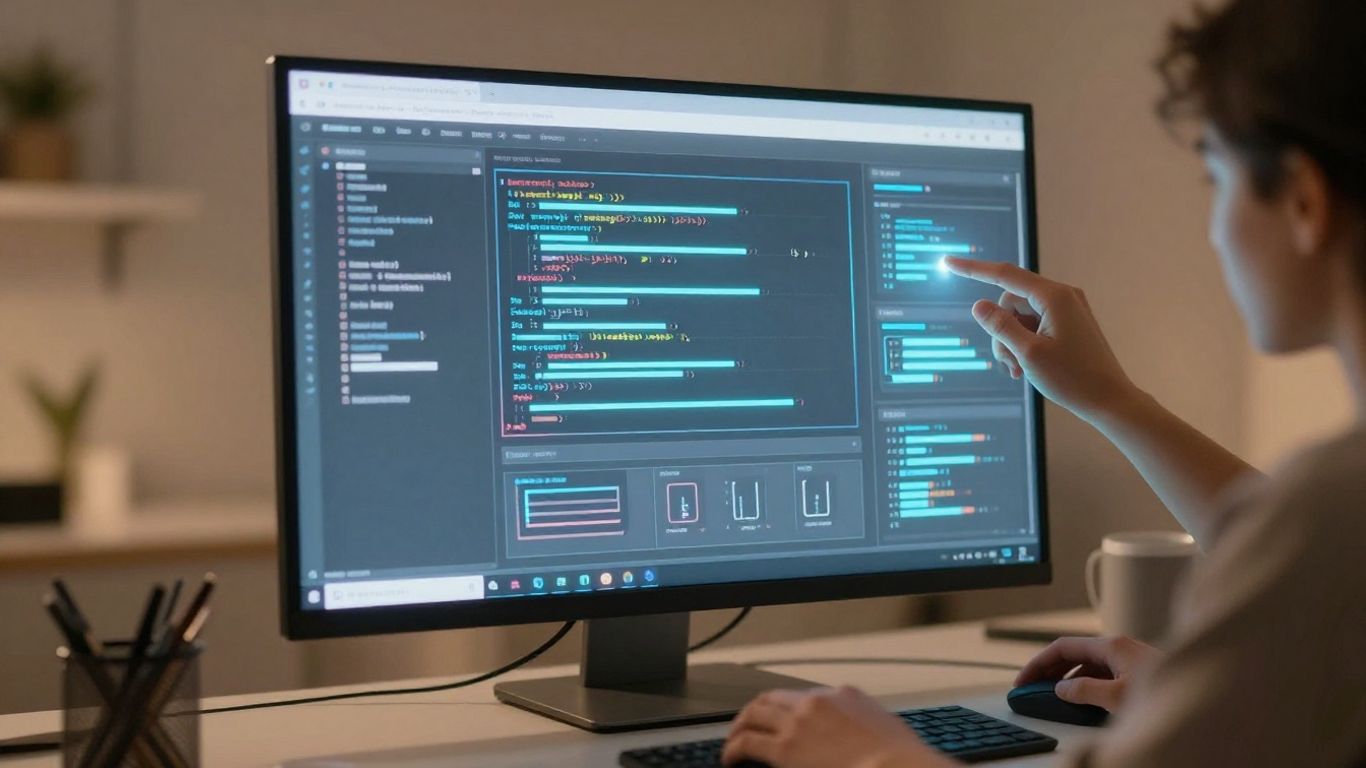
Artificial intelligence is fundamentally altering the pace at which design teams move from concept to deployment. Instead of manual adjustments for each viewport, designers can now leverage smart tools that handle repetitive tasks while providing creative suggestions based on established brand components.
Automating complex layout generation for internal systems
AI design assistants are becoming indispensable for handling the sheer scale of modern internal content systems. By understanding the underlying design tokens, these tools automatically generate mockups that adhere perfectly to established guardrails, preventing the common problem of style fragmentation as projects grow in size.
AI-driven content personalization at scale
Personalization at the individual user level was once limited to simple CRM segmentation, but AI has pushed this into real-time relevance. By analyzing engagement patterns on the fly, systems can update product landing pages or editorial recommendations, making every visit unique and highly relevant to the intent of the visitor.
Streamlining the design-to-code pipeline with automated tools
Bridging the gap between manual design software and actual production code has historically been a significant friction point. Automated conversion tools now map design elements directly to component libraries, ensuring that the final site matches the high-fidelity mockups with pinpoint accuracy while reducing common translation errors during development.
Strategies for building scalable and maintainable codebases
Architectural longevity relies on the discipline of the development team to prioritize clean, modular code over quick-fix solutions. This mindset ensures that technical debt remains manageable as the project matures and requirements become more intricate.
Implementing modular design systems for brand consistency
Standardizing interface components across every department ensures that the user experience remains stable, no matter the size of the team working on the platform. By utilizing a centralized library of design assets and code tokens, startups can view our services to see how consistency reduces training time for new contributors.
Integrating automated testing within the CI/CD pipeline
Catching issues before they reach a user's browser is the best way to maintain high service levels. Building a robust CI/CD pipeline that forces meaningful test coverage for every pull request prevents fragile code from ever entering production environments.
Adopting sustainable web development practices for longevity
Sustainability in development means writing code that consumes fewer computing resources and is simpler to maintain for years to come. By opting for efficient frameworks and pruning redundant third-party libraries, teams ensure their digital assets don't become bloated and obsolete due to excessive technical load.
Maximizing conversion through performance and data
Performance is a key indicator of user intent and the primary driver of digital success for modern platforms. Understanding how to use data to inform site adjustments is how leaders pull away from the competition.
Optimizing core web vitals for search engine dominance
Core Web Vitals act as the benchmark for how users perceive site reliability and responsiveness. Improving these metrics requires focus on main thread performance, image loading strategies, and minimizing render-blocking elements that degrade the experience for mobile visitors.
Integrating behavioral analytics for real-time site adjustments
Data-driven sites use analytics tools to watch where users click, scroll, and stop, allowing for instantaneous adjustments to layout. When you use a web experience guide to interpret these behavioral triggers, you can convert more casual visitors into active participants.
Balancing high-end visual storytelling with technical performance requirements
Striking the balance between creative ambition and technical constraints requires a pragmatic approach to asset management. High-definition media is important for storytelling, but it must be optimized through modern compression standards so it never sacrifices the site load speed required for a good user experience.
Conclusion
Successfully managing a growing digital presence in 2026 requires a balanced focus on modern, efficient infrastructure and user-centric design data. Organizations that embrace these technologies while remaining committed to long-term scalability will naturally outpace those clinging to outdated, monolithic development approaches.
Frequently Asked Questions
How does minimal design improve conversion?
Minimalist designs reduce the cognitive load on a visitor by surfacing the most critical information immediately. By limiting distractions, users can focus entirely on the core call to action, which generally leads to higher completion rates for essential tasks.
Why is a headless architecture better for growth?
Headless architectures allow for independent development of the frontend and backend. This split lets teams update the site functionality as quickly as the product team can build it, without needing to rewrite whole legacy systems as the site expands.
Does edge computing impact SEO?
Yes, edge computing improves site speed, which is a major factor in search engine ranking. Faster loading pages typically receive better signals from crawlers, directly contributing to improved organic visibility in competitive landscapes.
How are design systems maintained at scale?
Design systems are maintained through version-controlled component libraries. By treating design assets like software code, teams ensure that updates to variables like color or spacing propagate through the entire site automatically.
Can AI replace human design roles?
AI tools act as accelerators but do not replace the need for high-level creative direction. They handle the mechanics of layout and implementation, allowing human designers to focus on brand identity, strategic positioning, and user empathy.
Why are behavioral analytics essential?
Behavioral analytics provide the objective data needed to improve conversion rates beyond simple guesswork. By seeing where users typically exit a funnel, you can identify hidden UX flaws and fix them before they lose additional revenue.
What are the main challenges of serverless?
Transitioning to serverless requires a change in development mindset toward stateless functions. The primary challenge involves managing cold starts and ensuring that the application logic does not rely on local server storage for state management.


Comments
Post a Comment