More Than Metrics: Elevating Digital Experiences Through Human-Centric Design
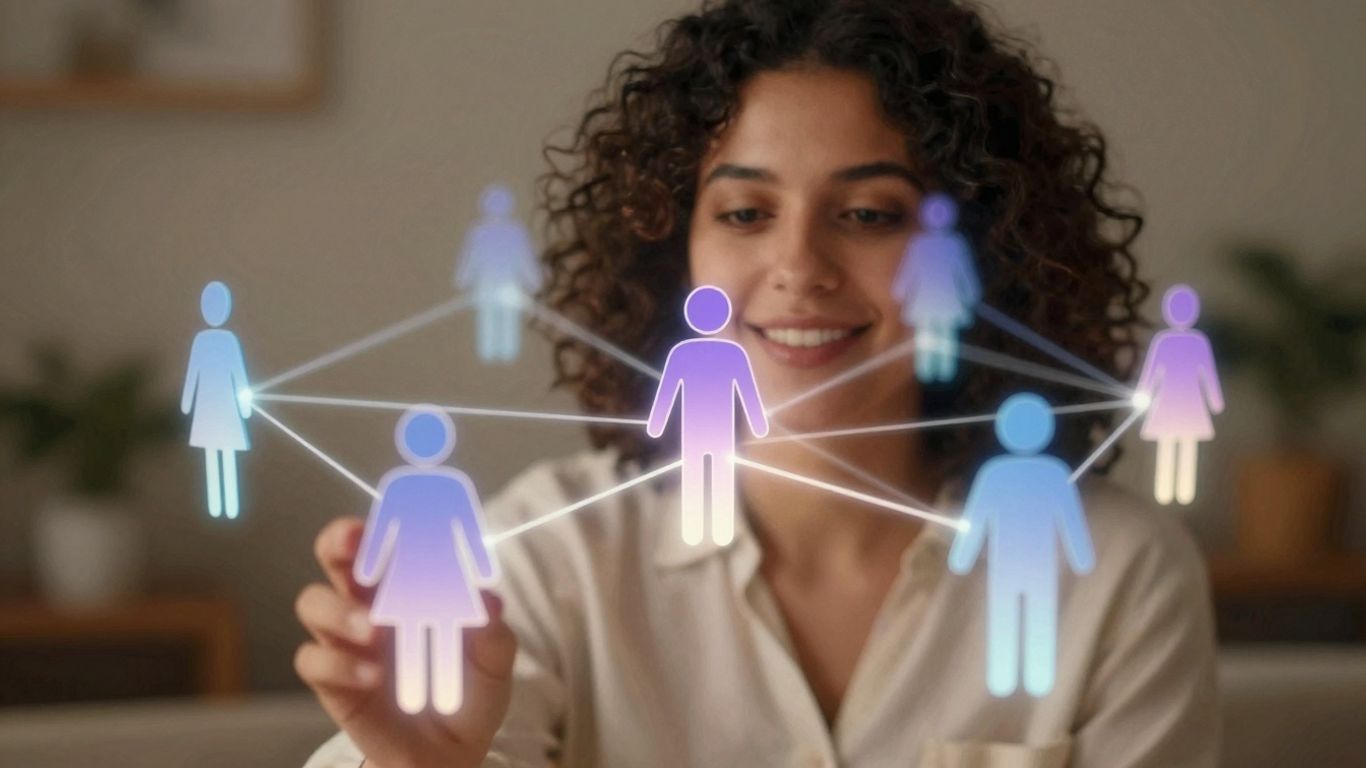
We talk a lot about numbers and data in the digital world. But sometimes, focusing only on metrics can make us forget who we're actually building for: real people. This article is about shifting our focus from just tracking numbers to really understanding and designing for the humans behind the screens. It's about creating digital experiences that feel good, work well, and actually make life a little bit easier. We'll explore why this approach, called human-centric design, is more than just a buzzword – it's key to building successful and meaningful digital products.
Key Takeaways
- Human-centric design means putting people's needs and feelings first, not just what the numbers say.
- Designing for people builds trust and makes them want to stick around, which is good for business.
- Understanding users deeply through research helps avoid costly mistakes and leads to better products.
- It's not always easy to balance what people need with what a business wants, but it's worth the effort.
- Designing with people in mind can solve bigger problems and create a more positive impact on the world.
Understanding The Core Of Human-Centric Design
Prioritizing User Needs and Empathy
At its heart, human-centric design is about putting people first. It’s a way of thinking that starts with understanding who you’re designing for, what they really need, and how they feel. This isn't just about asking people what they want; it's about stepping into their shoes, trying to see the world from their perspective. We call this empathy, and it’s the bedrock of creating anything that truly works for people.
Think about it: when a product or service feels like it was made just for you, it’s usually because the designers spent time really getting to know users. They observed them, talked to them, and tried to understand their struggles and joys. This deep dive helps designers move beyond assumptions and create solutions that fit naturally into people's lives.
The goal is to build things that are not only functional but also feel right, making everyday tasks easier and more pleasant. It’s about designing with care.
Beyond Individual Users: Embracing Humanity-Centered Design
While focusing on individual users is important, there's a bigger picture to consider. This is where humanity-centered design comes in. It takes the empathy we use for individuals and expands it to think about the wider impact of our designs on communities, society, and even the planet. It asks us to look beyond the immediate user and consider the ripple effects.
For example, designing a new app might focus on making it easy for one person to use. But a humanity-centered approach would also ask: How does this app affect people's privacy? Does it contribute to digital divides? Does it promote healthy habits or unhealthy ones? It’s about being responsible for the broader consequences.
Here are some key questions humanity-centered design prompts:
- What are the long-term effects of this design on society?
- Does this solution consider the needs of diverse groups, not just the majority?
- How can we design in a way that is sustainable and doesn't harm the environment?
- Are we addressing the root causes of problems, or just the surface symptoms?
The Evolution From User-Centered To Humanity-Centered
Design thinking has evolved. We started with a focus on making things usable for individuals – that was user-centered design. Then, we broadened that to consider the people using the product and their context, leading to human-centered design. Now, the conversation is shifting towards humanity-centered design. This latest step acknowledges that our designs don't exist in a vacuum; they are part of a larger system.
Don Norman, a big name in design, talks about this shift. He points out that while human-centered design is good, it can sometimes be too narrow. Humanity-centered design pushes us to think about the bigger picture: the well-being of all people, the health of the planet, and the future we're building. It’s about designing for the greater good, not just for a single user or even a single community.
This evolution means designers have a greater responsibility. It’s not just about creating a slick interface or a convenient feature. It’s about asking if our work contributes positively to the world. This broader perspective helps us tackle complex issues and create solutions that are more ethical, sustainable, and truly beneficial for everyone involved, now and in the future.
The Tangible Benefits Of Designing For People
When we actually put people at the center of our design process, it’s not just about making things look pretty or feel nice. It translates into real, measurable wins for businesses. Think about it: if a product or service genuinely solves a problem or makes someone's life easier, they're going to notice. And they're going to stick around.
Enhancing Brand Reputation and Market Positioning
Designing with people in mind does wonders for how a company is perceived. It moves beyond just selling a product; it's about building trust and showing that you actually care about your customers' well-being. This kind of thoughtful approach can really set a brand apart in a crowded market. It’s like the difference between a generic store brand and a name you know and trust. When people have positive experiences, they talk about it. This word-of-mouth, amplified by positive online reviews and social sharing, builds a strong reputation that’s hard to buy. It’s about creating a perception of quality and reliability that attracts new customers and keeps existing ones happy. This focus on user experience can even influence creative analytics, making marketing efforts more effective.
Driving Customer Loyalty and Lifetime Value
Loyalty isn't just given; it's earned. When a digital experience is intuitive, helpful, and respects a user's time and needs, customers feel valued. This feeling is what turns a one-time buyer into a repeat customer, and eventually, a brand advocate. Think about Apple – their whole design philosophy revolves around the user, and look at their incredibly loyal customer base. This loyalty means reduced costs for acquiring new customers because your existing ones keep coming back. It also means they're more likely to try new products or services you offer. Ultimately, happy, loyal customers contribute significantly to a company's long-term financial health.
Achieving Significant Return on Investment
Some might see human-centered design as an added cost or a time sink. But the reality is, it saves money and makes money in the long run. By getting the design right the first time through proper research and testing, companies avoid costly mistakes and redesigns down the line. Products that people actually want and can use easily lead to higher adoption rates and fewer support requests. This efficiency, combined with increased customer satisfaction and loyalty, directly impacts the bottom line. It’s about making smart investments upfront that pay off handsomely over time. A well-designed product, with a focus on simplicity and purpose, often feels more sophisticated and trustworthy, aligning with a minimalism 2.0 approach.
Investing in understanding your users isn't just a nice-to-have; it's a strategic business decision that yields tangible results. It’s about building products that people not only use but also love, leading to sustained growth and a stronger market position.
Here’s a quick look at how these benefits stack up:
- Improved Brand Image: Positive user experiences build trust and credibility.
- Increased Customer Retention: Satisfied users are more likely to return.
- Reduced Development Costs: Fewer errors and redesigns mean savings.
- Higher Conversion Rates: Intuitive designs make it easier for users to complete desired actions.
- Word-of-Mouth Marketing: Happy customers become brand ambassadors.
Putting Human-Centric Principles Into Practice

So, how do we actually do this human-centric design thing? It's not just about making pretty interfaces or apps that are easy to click. It's about really getting to know the people you're designing for, and then building something that genuinely helps them. It starts with empathy, which sounds like a soft skill, but it's actually the bedrock of good design.
Empathy: The Foundation Of Meaningful Experiences
Think about it: if you don't understand what someone is going through, how can you possibly create something that makes their life better? Empathy means stepping into their shoes, feeling what they feel, and seeing the world from their perspective. It’s about asking “why?” a lot, and really listening to the answers. This isn't just about understanding individual frustrations; it's about grasping the bigger picture of their daily lives, their hopes, and their challenges. Without genuine empathy, your design is just a guess, and usually, a bad one.
Discovery and Research: Informing Design Decisions
Once you've got that empathetic mindset, it's time to dig deeper. This is where research comes in. Forget making assumptions. We need to gather real information. This could mean talking to people directly, watching how they interact with existing products, or looking at data. The goal is to get a clear picture of user needs, behaviors, and pain points. This data is what guides your design choices, making sure you're building something that actually solves a problem, not just something you think is cool.
Here’s a quick look at what this might involve:
- User Interviews: Having one-on-one conversations to understand individual experiences.
- Surveys: Gathering broader feedback from a larger group.
- Usability Testing: Observing people as they try to use a product or prototype.
- Contextual Inquiry: Watching users in their natural environment to see how they work.
Making design decisions based on solid research prevents costly mistakes down the line. It's like building a house on a strong foundation instead of sand.
Iterative Prototyping and User Testing
Design isn't a one-and-done deal. It's a cycle. You build a rough version – a prototype – and then you test it with real people. You see what works, what doesn't, and where people get stuck. Then, you take that feedback and make improvements. You repeat this process, refining the design with each round of testing. This iterative approach means you're constantly learning and adapting, making sure the final product is as user-friendly and effective as possible. It’s about getting it right, not just getting it done.
Navigating Challenges In Humanity-Centered Design
So, we've talked a lot about why designing for people, really for all of humanity, is the way to go. But let's be real, it's not always a walk in the park. There are some pretty big hurdles to jump over.
Balancing Business Priorities With Ethical Considerations
This is a big one. Companies, understandably, need to make money. They've got bottom lines, shareholders, and quarterly reports to worry about. This often means a focus on quick wins and immediate profits. It can be tough to convince stakeholders to invest time and resources into solutions that might take longer to show a return, even if they're better for people and the planet in the long run. It's a constant push and pull.
- Short-term gains vs. long-term impact: How do we justify spending more now for benefits that might not appear for years?
- Measuring success: Traditional metrics often focus on immediate engagement or sales, not on societal well-being or environmental health.
- Resource allocation: Ethical considerations can require more research, testing, and potentially more expensive materials or processes.
Sometimes, the most profitable path in the short term isn't the one that leads to a healthier future for everyone. Finding that balance requires careful planning and a clear vision of what success truly looks like.
Addressing Diverse Needs and Stakeholder Perspectives
Humanity is incredibly diverse, right? What works for one group might not work for another, and sometimes, a solution designed to help one community could unintentionally cause problems for another. Designers have to think about a huge range of people, cultures, abilities, and backgrounds. This means talking to a lot of different folks – users, experts, community leaders, even policymakers. It takes time, effort, and a willingness to listen.
- Inclusivity: Ensuring designs are accessible and beneficial to people of all abilities, ages, and backgrounds.
- Cultural sensitivity: Understanding and respecting different cultural norms and values.
- Conflict resolution: Mediating between competing needs and interests of various stakeholder groups.
Overcoming Resistance To Change
People, and organizations, tend to like what they know. Introducing new ways of doing things, especially when they challenge established norms or require a shift in thinking, can be met with resistance. Humanity-centered design often calls for a departure from familiar approaches. Proving the value of these new methods, especially when the benefits are long-term and less tangible, can be a challenge. It requires patience and a consistent effort to demonstrate the positive outcomes.
- Habit and familiarity: People often stick with what's comfortable, even if it's not optimal.
- Skepticism: Doubts about the effectiveness or feasibility of new, more ethical approaches.
- Inertia: The tendency for systems and organizations to resist change due to established processes and structures.
Demonstrating Value: The Business Case For Ethical Design
Aligning Ethical Design With Financial Goals
It’s easy to think of ethical design as just a “nice-to-have,” something that’s good for the world but doesn’t really move the needle on the bottom line. But that’s a pretty narrow view, honestly. When we talk about ethical design, we’re really talking about building things that people connect with, things that last, and things that don’t cause harm. Turns out, that’s pretty good for business.
Companies often get stuck on short-term gains, which makes it tough to argue for design choices that might cost a bit more upfront or take longer to pay off. But we need to show them how being ethical actually makes financial sense. Think about it: a brand that’s known for doing right by its customers and the planet? That builds trust. And trust? That’s gold. It means people stick around longer, they spend more, and they’re less likely to jump ship when something shinier comes along.
Here’s how we can start making that case:
- Show, Don't Just Tell: Use real examples and data. If a competitor saw a jump in sales after making their product more accessible, point that out. If a company reduced customer complaints by simplifying their interface, highlight that win.
- Focus on Risk Reduction: Ethical lapses can lead to PR nightmares, fines, and lost customers. Designing responsibly from the start is like buying insurance – it prevents a lot of headaches down the road.
- Expand Your Audience: Inclusive design isn't just about being fair; it's about reaching more people. If your product works for a wider range of users, you've just opened up new markets.
We need to stop seeing ethical design as a separate cost center and start viewing it as a strategic investment that pays dividends in customer loyalty, brand reputation, and long-term stability.
Leveraging Social Responsibility As A Differentiator
In today's crowded marketplace, what makes one brand stand out from another? Often, it’s not just the product itself, but what the brand stands for. People are increasingly paying attention to the values behind the companies they support. This is where weaving social responsibility into your design can be a real game-changer.
It’s not about slapping a green logo on things or making a vague promise to be better. It’s about making genuine, thoughtful choices that reflect a commitment to people and the planet. When customers see that a company is actively trying to make a positive impact, it creates a deeper connection. They feel good about giving their money to that brand, and that feeling can be a powerful motivator.
Consider these points:
- Authenticity is Key: Customers can spot a fake a mile away. Your social responsibility efforts need to be real and integrated into your business, not just a marketing ploy.
- Industry Matters: The impact of social responsibility varies. In some sectors, like fashion or food, consumers are highly attuned to ethical sourcing and environmental impact. In others, the connection might be less direct but still important for overall brand perception.
- Storytelling Power: Share the stories behind your ethical choices. How did you decide to use recycled materials? What impact did that have? People connect with narratives, and these stories can build a strong emotional bond with your brand.
Communicating The Long-Term Impact
Talking about the future can be tricky in business. Everyone’s focused on the next quarter, the next product launch. But ethical design isn't just about the here and now; it's about building something that lasts and benefits everyone in the long run. So, how do we get people to care about that long-term vision?
It starts with showing how today’s ethical decisions create a better tomorrow. This isn't just about avoiding problems; it's about creating positive outcomes that might not be obvious immediately. We need to paint a picture of what success looks like not just in terms of profit, but in terms of societal well-being and environmental health.
Here’s a breakdown of how to communicate this:
- Impact Assessments: Conduct studies that look beyond immediate returns. What are the potential social and environmental consequences of a design choice over five, ten, or even twenty years?
- Scenario Planning: Explore different future possibilities. How might a design adapt to changing societal needs or environmental conditions? This shows foresight and a commitment to enduring value.
- Feedback Loops: Set up ways to gather feedback long after a product is launched. Are there unintended negative effects? How can the design be improved to better serve its long-term purpose?
By focusing on these aspects, we can help stakeholders understand that investing in ethical design isn't just about doing good; it's about building a more resilient, reputable, and ultimately more successful business for the future.
Designing For A Better World
It’s easy to get caught up in the day-to-day of digital products, focusing on clicks, conversions, and immediate user satisfaction. But what if our design work could ripple outwards, making a real difference? That’s the heart of designing for a better world – moving beyond individual user needs to consider the broader impact on society and the planet. It’s about asking the tough questions: Is this solution truly helping people in the long run? What are the unintended consequences? We have a responsibility to think bigger than just our immediate users.
Solving Root Issues For Societal Well-being
Humanity-centered design, as championed by thinkers like Don Norman, pushes us to look at problems not just as individual pain points, but as systemic issues. Think about something like plastic waste. A simple user-centered approach might focus on making recycling easier for the individual. But a humanity-centered approach digs deeper. It asks: How can we design systems that reduce plastic production in the first place? How can we support communities dealing with the fallout of pollution? This means working with communities, not just for them, understanding that those closest to the problem often have the best insights for solutions. It’s about co-creating, not dictating.
Considering The Entire Ecosystem And Future Generations
When we design, we're not just creating a product or service for today. We're contributing to a larger ecosystem, and our choices have long-term effects. This involves thinking about environmental sustainability – are our materials sourced responsibly? Is our digital product energy-efficient? It also means considering social equity. Are we designing in ways that exclude certain groups, or are we actively working towards inclusivity? We need to consider the ripple effects, much like how search engines are evolving to understand user intent more deeply, impacting how brands build trust [9a1f].
Implementing Sustainable And Responsible Solutions
So, how do we actually do this? It’s a process, and it requires a shift in mindset. Here are a few steps designers can take:
- Engage Diverse Stakeholders: Talk to everyone affected, especially marginalized groups. Their perspectives are vital.
- Define Ethical Goals: What does a
Let's build a better online space together. We focus on creating websites that not only look good but also help your business grow. Ready to make your mark? Visit our website to see how we can help you shine online.
Wrapping It Up
So, we've talked a lot about how putting people first in design isn't just a nice idea, it's actually smart business. When we really think about what people need and build things with them in mind, we end up with products and services that people actually like using. It’s not just about making things look pretty or work technically; it’s about making life a little bit easier, or at least less frustrating. Remember that stat about people preferring traffic jams to bad online experiences? That says it all. By focusing on empathy and understanding, we can build better digital stuff, keep customers happy, and honestly, just do a better job overall. It’s a win-win, really.
Frequently Asked Questions
What's the main idea behind designing for people?
Designing for people, also called human-centered design, is all about understanding what people really need and want. Instead of just building something because we can, we try to figure out how to make people's lives easier and better through the things we create, like apps or websites.
Why is empathy important in design?
Empathy means putting yourself in someone else's shoes. In design, it's super important because it helps us understand how people feel and what problems they're trying to solve. When we design with empathy, we make things that truly help and make people happy.
How does designing for people help businesses?
When businesses focus on people, customers tend to like them more. This can lead to more people using their products, staying loyal, and even telling their friends. It's like building a good reputation that helps the business grow and make more money in the long run.
What's the difference between user-centered and humanity-centered design?
User-centered design focuses on one person at a time and what they need. Humanity-centered design is bigger; it thinks about how our designs affect whole groups of people, communities, and even the planet. It's about making things good for everyone, now and in the future.
Is it hard to design for everyone's needs?
Yes, it can be tricky! People are different, and what works for one person might not work for another. Plus, businesses sometimes care more about making money fast than about doing what's best for people long-term. Designers have to find smart ways to balance these things.
How can we make sure our designs are good for the world?
To make designs good for the world, we need to think about big problems, not just small ones. We should also consider how our designs affect nature and future generations. Making things that last, are fair, and don't cause harm is key to designing for a better future.


Comments
Post a Comment